
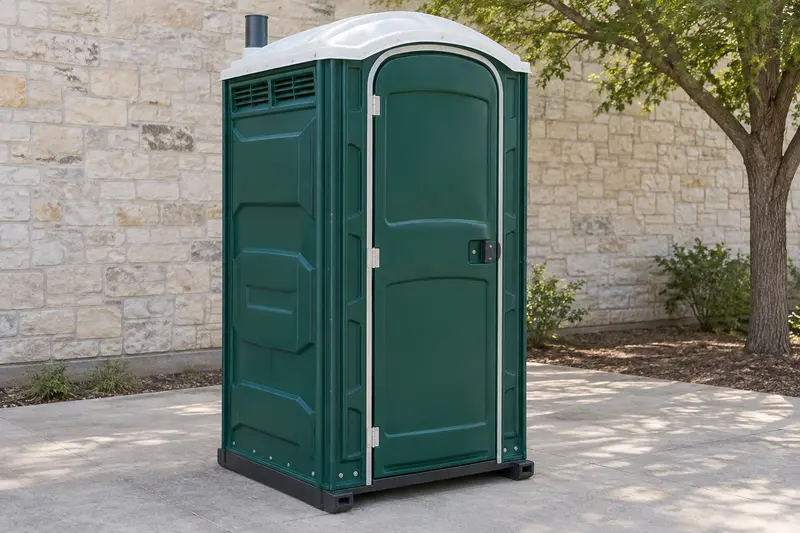
A cabin category is a starting point, not a specification
Standard portable toilets usually provide a self-contained, non-flushing restroom. Ask what the proposed model includes: internal fittings, ventilation, a door latch and supplies should be understood before acceptance. A sink, lighting or flushing mechanism should not be assumed from a photograph.
Explain whether the cabin will replace unavailable indoor facilities or supplement toilets that remain open. A renovation crew depending entirely on temporary toilets has a different use pattern from guests with access to a venue building.
Allow space for the person as well as the unit
The proposed position needs a usable approach, clearance for the door and a suitable surface. Keep it out of material handling areas and avoid planning it as an afterthought behind parked vehicles. Ask the provider to review the location rather than estimating suitability from the cabin footprint alone.
Handwashing belongs in this discussion. Consider where someone goes after using the toilet, whether washing is already available and who looks after supplies between agreed service visits.
Make cleaning and collection part of the initial enquiry
Describe the working hours or event programme, the expected users and the rental period. Ask what servicing is proposed, which tasks are included and how to report a concern. If the site cannot be accessed every day, share the gate schedule before a service arrangement is accepted.
When your plans change, contact the rental team before relocating equipment yourself. Keep the agreed collection approach clear until the unit is removed. The available cabin, delivery window and service plan are confirmed for your North Miami address, not guaranteed by this example.